
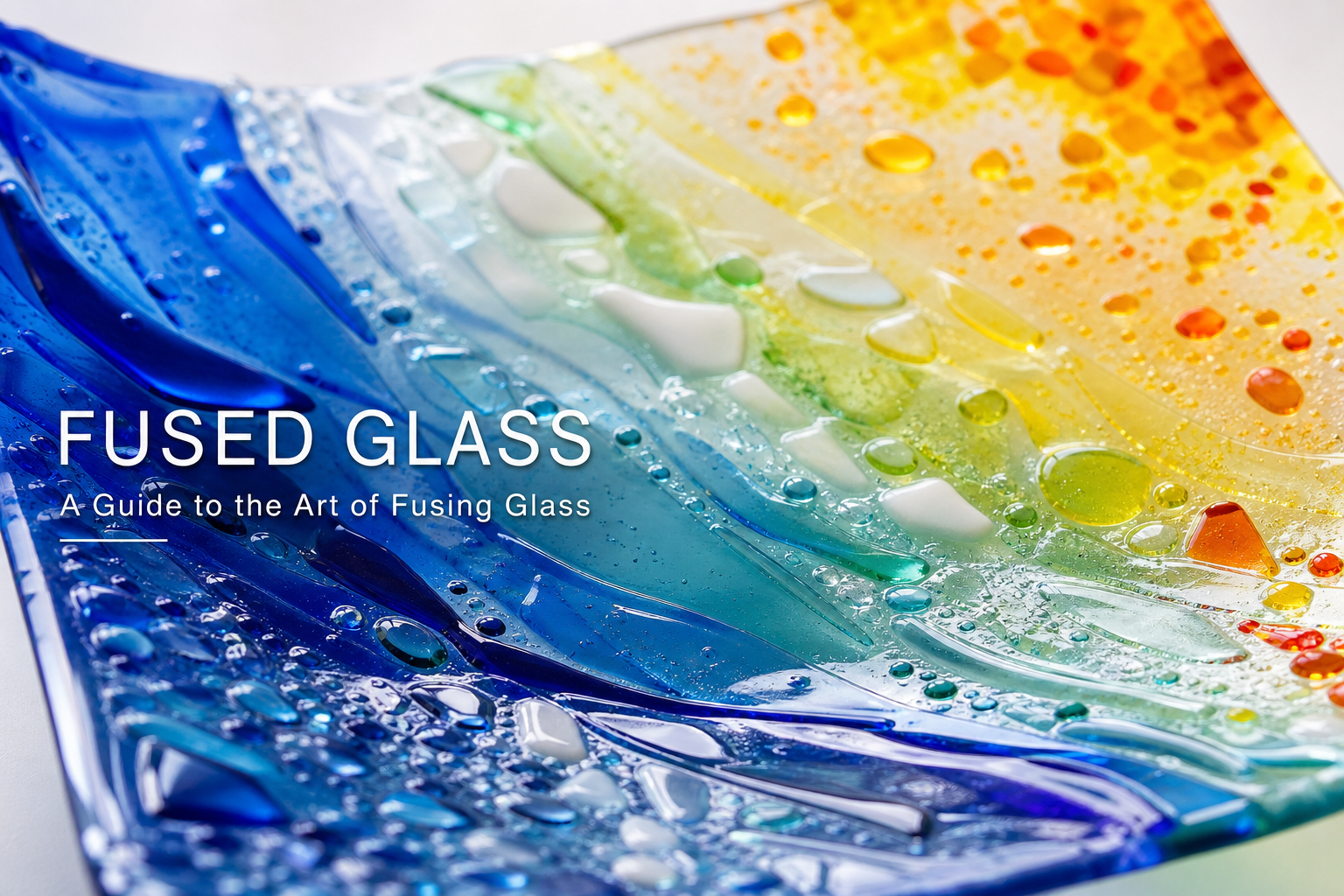
How fused glass works
Fused art glass is the foundation of every Peggy Karr plate. Understanding the technique helps collectors spot authentic studio work and appreciate why these pieces still command attention decades after production.
Related picks
Plates to compare
Listings collectors cross-shop when building a Peggy Karr set.
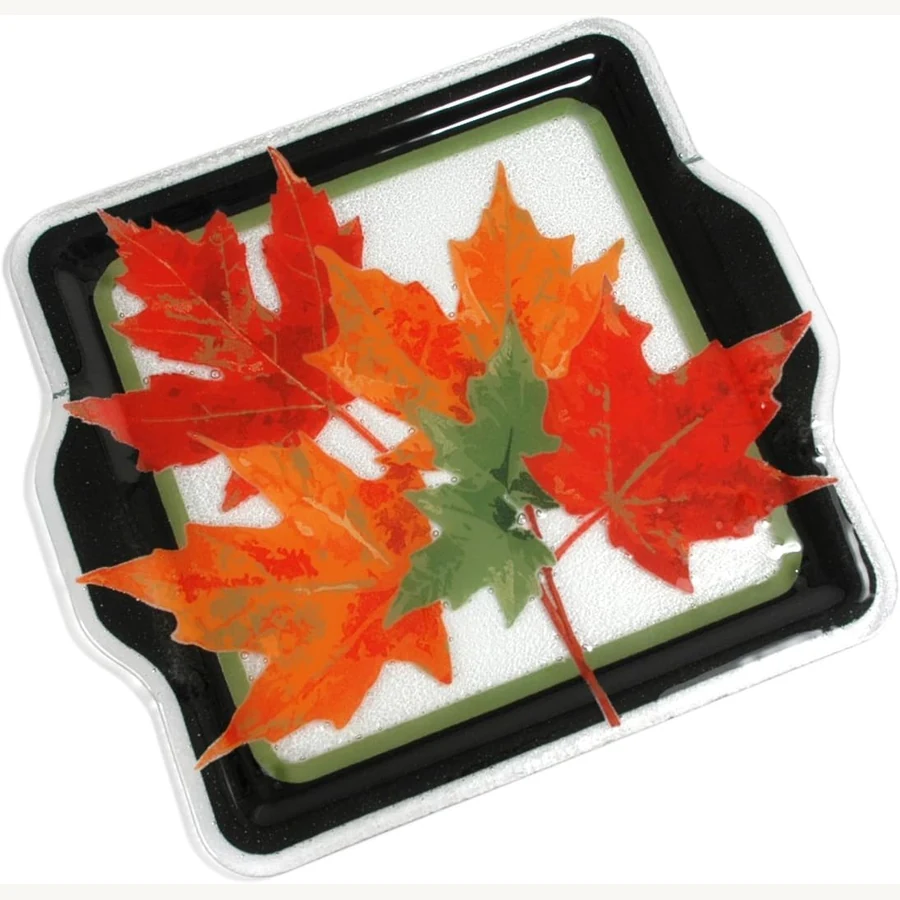
Maple Leaves Tray 18"
Layered leaf tones show how Peggy Karr fused transparent and opaque sheets into one glossy surface.
Check Price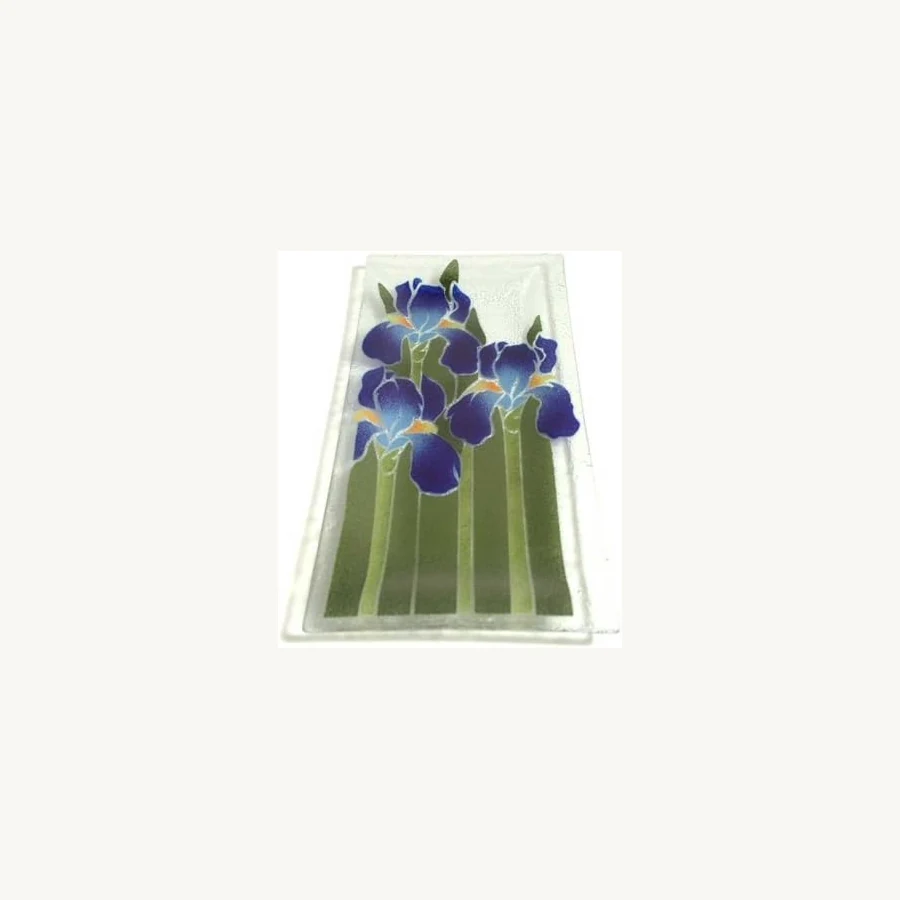
Iris Serving Tray 14"
Purple iris blooms across a 14-inch tray demonstrate the floral painterly style the studio perfected.
Check Price
Tuscany Tray 14"
Harvest olive and sunflower motifs make this rectangular tray a study in warm fused-glass color.
Check Price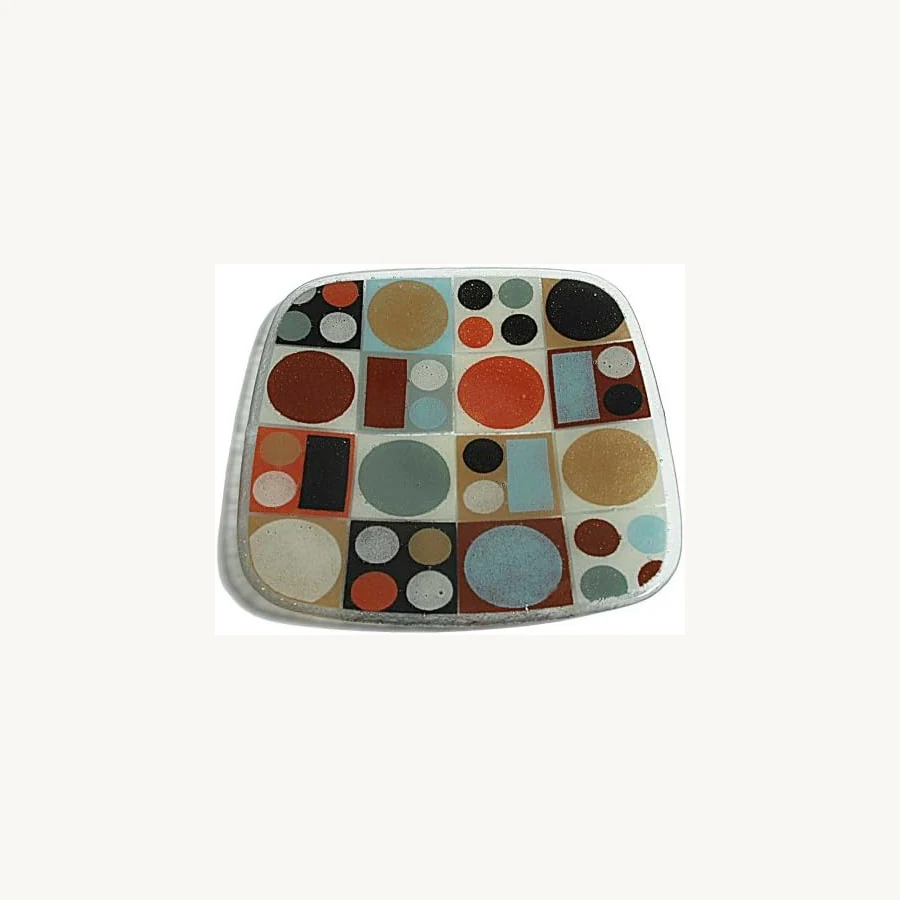
Metro Earth Plate 12"
Concentric earth bands reveal how sheet glass and frit stack before a single full-fuse firing.
Check Price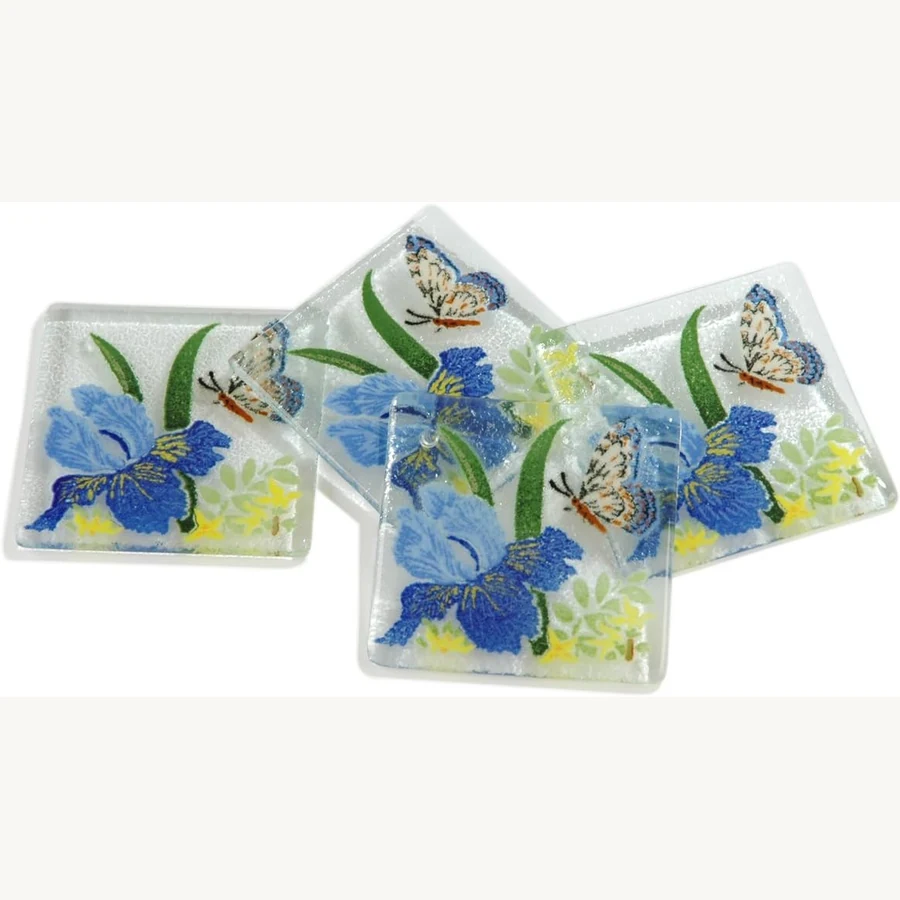
Forsythia Coasters Set of 4
Four-inch coasters pack fine floral detail into a small format ideal for learning Karr texture.
Check Price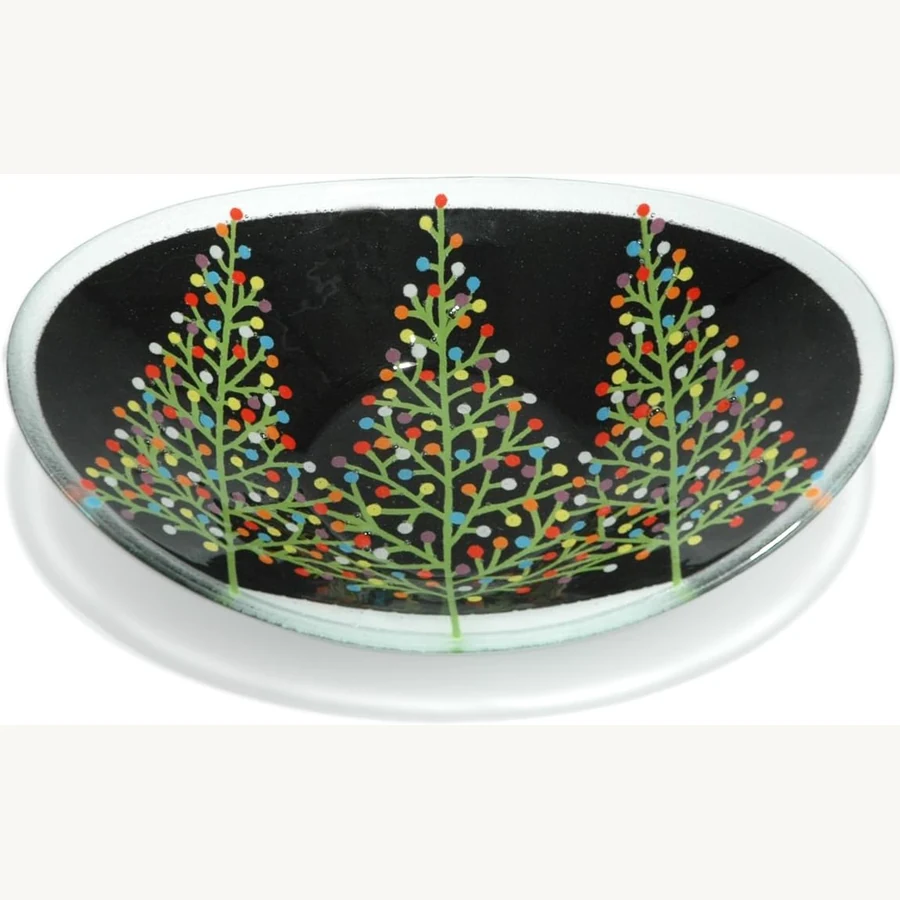
Tannenbaum Bowl 16"
An oval bowl form shows Peggy Karr glass beyond flat plates—still fully fused and food-safe.
Check PriceKiln layering basics
Fused glass begins as sheet glass, frit and stringers arranged on a flat kiln shelf. Peggy Karr designs often stack transparent blues for water, opaque whites for clouds and fine frit for grassy texture. The studio fires each plate through controlled heat cycles until the layers bond without melting into a puddle.
Unlike blown glass, fused work stays relatively flat—ideal for serving platters. The artist can add multiple firings: a base layer for background color, a second tack-fuse for detail elements, sometimes a slump firing to add a gentle rim curve. Each pass risks bubble formation or color shift, which is why consistent studio quality mattered to Karr's reputation.
Collectors should look for even thickness across the plate face. Thin spots feel hollow when tapped and may crack under serving weight. Authentic pieces show slight texture where frit settled—smooth as a dinner plate but not mirror-flat like float glass.
Color and light behavior
Transparent reds and oranges in sunflower petals glow near windows. Opaque stringers block light and create crisp outlines—lighthouse stripes depend on this contrast. When a listing photo looks flat, request a shot against daylight to confirm depth.
Some colors strike differently after firing than they appear cold. Studio artists compensate from experience; that expertise is part of why handmade Karr plates outperform generic imported glass trays that use single-sheet prints.
UV exposure can mellow reds over many years. Display rotation is a simple preservation step serious collectors use, especially for plates near coastal windows with intense reflected light.
Texture tells truth
Run a clean fingertip along the surface. Authentic fused work may feel subtle bumps where frit clustered. Completely uniform slickness on a supposed vintage Karr piece warrants closer signature inspection—some reproductions use decaled ceramics.
Bubbles trapped between layers are normal in small quantities. Large burst bubbles or sharp pits often indicate impact damage or a flawed firing. Document any rim chips before purchase; they cut resale value sharply.
The back of a plate frequently shows kiln shelf texture or faint shelf marks. Do not confuse those factory marks with scratches—they are expected on many studio runs.
Versus other glassware
Slumped bowls stretch single sheets into shape; Karr plates are built from layers for pictorial scenes. Painted ceramics lack internal color—only surface glaze. That difference matters when guests ask why the lighthouse beam seems to shine from within.
Mass-market tempered glass trays cannot be repaired easily. Fused plates can sometimes be ground at a chip if the damage is minor, though collectors usually prefer untouched examples. See our value guide before altering a piece.
If you are comparing studio glass brands, Peggy Karr sits in the accessible art tier—more affordable than one-off gallery panels, more artistic than department-store serveware. That positioning built the large installed base you still see at estate sales.
Buying with confidence
Ask sellers for back photos showing signature and any stickers. Request weight—solid fused rounds feel heavier than thin slumped alternatives. Our signature guide lists script variations by era.
Shipping requires rigid boxes and plate corners. Sellers who wrap only in bubble mailers risk rim chips in transit—a common theme in collector reviews. Factor possible damage into auction bids.
Once purchased, hand-wash and store upright. The homepage care section covers daily habits that keep fused surfaces glossy for years of display and entertaining.
Studio legacy note
Peggy Karr's New Jersey operation trained artisans in repeatable color recipes while keeping designs cheerful and giftable. That balance—craft plus approachability—explains why fused glass plates became regional favorites before spreading nationally through catalogs and gift shops.
Production numbers for any single motif are hard to pin down, but open-edition runs mean most patterns are findable with patience. Rarity usually comes from retired designs, unusual color trials or pristine vintage pieces with original packaging intact.
About the author
Elena Marsh is a fused glass collector and editorial guide who has tracked Peggy Karr plates for over fifteen years. She buys at estate sales, documents condition grades, and writes independently—this site is not affiliated with Peggy Karr or her New Jersey company.